

On this page
Time to First Reply (FRT), also called First Response Time, is the median time between a customer raising a support ticket and an agent's first human response, calculated as (Sum of first response times) ÷ (Number of resolved tickets). Use the median rather than the mean so weekend tickets and outliers don't skew the result. The 2026 industry benchmark targets are < 4 hours for B2B SaaS email, < 1 hour for high-touch enterprise tiers, and < 1 minute for live chat (Zendesk, 2026). FRT is the front-line responsiveness signal in a composite customer health score — paired with First Contact Resolution (FCR) and CSAT, it predicts churn risk on the support side of the account.
A note on the acronym. FRT (First Reply Time / First Response Time) is the industry-standard short form and is what we use throughout this article. You'll also see "TFR" in the wild — on this site we reserve TFR specifically for Time to Full Resolution, which is a different metric.
2026 industry benchmarks by channel and plan tier#
The benchmark depends on channel (customers tolerate slower email than chat) and plan tier (enterprise SLAs are stricter than self-serve). The table below combines the 2026 Zendesk channel benchmarks with B2B SaaS plan-tier expectations we see in customer health scoring engagements.
| Channel / Tier | Good | Better | Best |
|---|---|---|---|
| Email — self-serve / SMB | < 24 hours | < 12 hours | < 4 hours |
| Email — B2B SaaS mid-market | < 12 hours | < 4 hours | < 1 hour |
| Email — enterprise / high-touch | < 4 hours | < 1 hour | < 15 minutes |
| Live chat | < 1 minute | < 40 seconds | < 20 seconds |
| Social media | < 5 hours | < 2 hours | < 30 minutes |
| Phone | < 30 seconds | < 20 seconds | < 10 seconds (≥80% answered) |
Sources: Zendesk 2026 first reply time benchmarks, Front 2026 customer service benchmarks, Sprinklr customer experience glossary.
A shorter FRT is generally better, but past a point it stops correlating with CSAT — once you're under the channel-appropriate threshold, customers stop noticing the difference. Focus on getting under the threshold for your plan tier, not on shaving seconds off an already-fast channel.
How to calculate Time to First Reply (FRT)#
The formula is simple:
FRT = (Sum of first response times across all tickets) ÷ (Number of resolved tickets)Three calculation choices materially change the result and should be documented:
- Median vs. mean. Always report the median. A single ticket left open over a long weekend will drag the mean by several hours; the median is robust to those outliers.
- Business hours only. A ticket raised at 19:00 Friday and responded to at 09:00 Monday is not a 62-hour FRT — it's a 1-hour FRT measured against your support business hours. Configure your help desk (Zendesk, Front, Intercom, HubSpot Service Hub) to compute FRT against business hours, not wall-clock time.
- Human reply, not auto-responder. The "first reply" is the first human response. Auto-acknowledgement emails ("We got your ticket, here's a confirmation number") don't count — including them produces a fake-fast FRT that doesn't correlate with CSAT.
Why FRT belongs in your customer health score#
FRT is one of four support-side signals that should feed a composite customer health score:
- FRT — how fast you reply at all (responsiveness)
- FCR — how often you resolve on the first touch (effectiveness)
- Time to Full Resolution (TFR) — total time from ticket open to closed (end-to-end speed)
- CSAT — how satisfied the customer was with the resolution
FRT alone isn't a customer-health metric — a fast reply that doesn't resolve the issue is still a bad experience. But rising FRT (above your plan-tier threshold) is one of the earliest leading indicators that a support team is under-resourced or that an account is about to get frustrated. Track it as a 30-day rolling median per account and flag accounts whose FRT has crept above the tier threshold for two weeks in a row.
How to reduce Time to First Reply#
The compounding moves that actually reduce FRT, in order of impact:
- Auto-triage on intake. Route tickets to the right team or skill on creation, not after the first agent reads them. Most help desks support keyword / ML-based triage out of the box.
- Tiered SLAs by plan. Enterprise tickets get a 1-hour SLA, mid-market 4-hour, self-serve 12-hour. Without tiering, you under-serve enterprise and over-serve self-serve.
- Macros and saved replies for the top 20% of question types. A pre-written reply for "How do I reset my password?" can drop the FRT for that question from minutes to seconds.
- Shift-left to self-serve. Every help-center article that prevents a ticket also prevents an FRT measurement. The cheapest first reply is the one you didn't have to send.
- Coverage windows that match customer geography. If 30% of your tickets arrive between 22:00 and 06:00 ET and you only staff 09:00-17:00 ET, your overnight FRT will dominate the median. Either staff the gap or set explicit business-hours expectations.
- AI-assisted drafting (the 2025-2026 lever). LLM-drafted reply suggestions for human agents to edit-and-send routinely cut FRT by 30-50% in B2B SaaS support orgs.
Challenges measuring FRT#
- Data fragmentation. If tickets arrive via email, chat, social, and phone but live in different systems, you can't compute a single FRT. Centralize first (Zendesk, Front, Intercom, HubSpot Service Hub) or stitch the data warehouse-side.
- Defining "first reply". Auto-responders, out-of-office notifications, and chatbot greetings can all be misclassified as "first reply" and inflate apparent performance.
- Business hours vs. wall-clock. See the calculation section above.
- Quality of the reply isn't measured. A fast reply that doesn't help is still a fast reply. Pair FRT with CSAT and FCR so you're not optimizing for speed at the expense of usefulness.
- Outlier handling. Tickets that sit open for weeks because the customer never replied to a clarifying question shouldn't be counted as multi-week FRT. Define "resolved" tickets only and document the rule.
FAQ#
What is time to first reply?#
Time to First Reply (FRT), also called First Response Time, is the median time between a customer submitting a support ticket and an agent's first human response. It's a core customer-service KPI and one of the four support-side signals in a composite customer health score.
What is a good first response time?#
It depends on channel and plan tier. The 2026 benchmark targets are < 12 hours for self-serve email, < 4 hours for B2B SaaS mid-market email, < 1 hour for enterprise email, and < 1 minute for live chat. Social media sits between email and chat at < 2-5 hours. See the benchmarks table above for the full breakdown.
How is first response time calculated?#
FRT = (Sum of first response times across all tickets) ÷ (Number of resolved tickets). Always report the median, not the mean. Compute against business hours only — weekend gaps shouldn't count. Count only the first human reply — auto-responders don't qualify.
What's the difference between first response time and resolution time?#
First Response Time (FRT) measures only the wait until an agent first replies. Time to Full Resolution (TFR) measures the total time from ticket open to ticket closed. A ticket can have a 1-minute FRT and a 5-day TFR if it requires engineering work to resolve. Track both — fast first replies don't necessarily mean fast resolutions. See our Time to Full Resolution guide for the resolution side of the picture.
How to reduce time to first reply?#
In order of impact: (1) auto-triage tickets to the right team on intake, (2) tier your SLAs by plan, (3) write macros for the top 20% of question types, (4) shift volume to self-serve via a help center, (5) align coverage windows to customer geography, (6) deploy AI-assisted reply drafting for human agents.
Does first response time affect customer satisfaction?#
Yes, but with diminishing returns. Once you're under the channel-appropriate threshold (e.g., < 4 hours for email), further reductions stop correlating with CSAT. The cliff is on the slow side — going from "12-hour reply" to "4-hour reply" lifts CSAT noticeably; going from "4-minute reply" to "1-minute reply" usually doesn't.
Is FRT the same as TFR?#
In the wider industry, "TFR" is occasionally used as a synonym for Time to First Reply — which is what this article is about. On this site we use FRT for first reply and reserve TFR for Time to Full Resolution to avoid the acronym collision.
Build your customer health score#
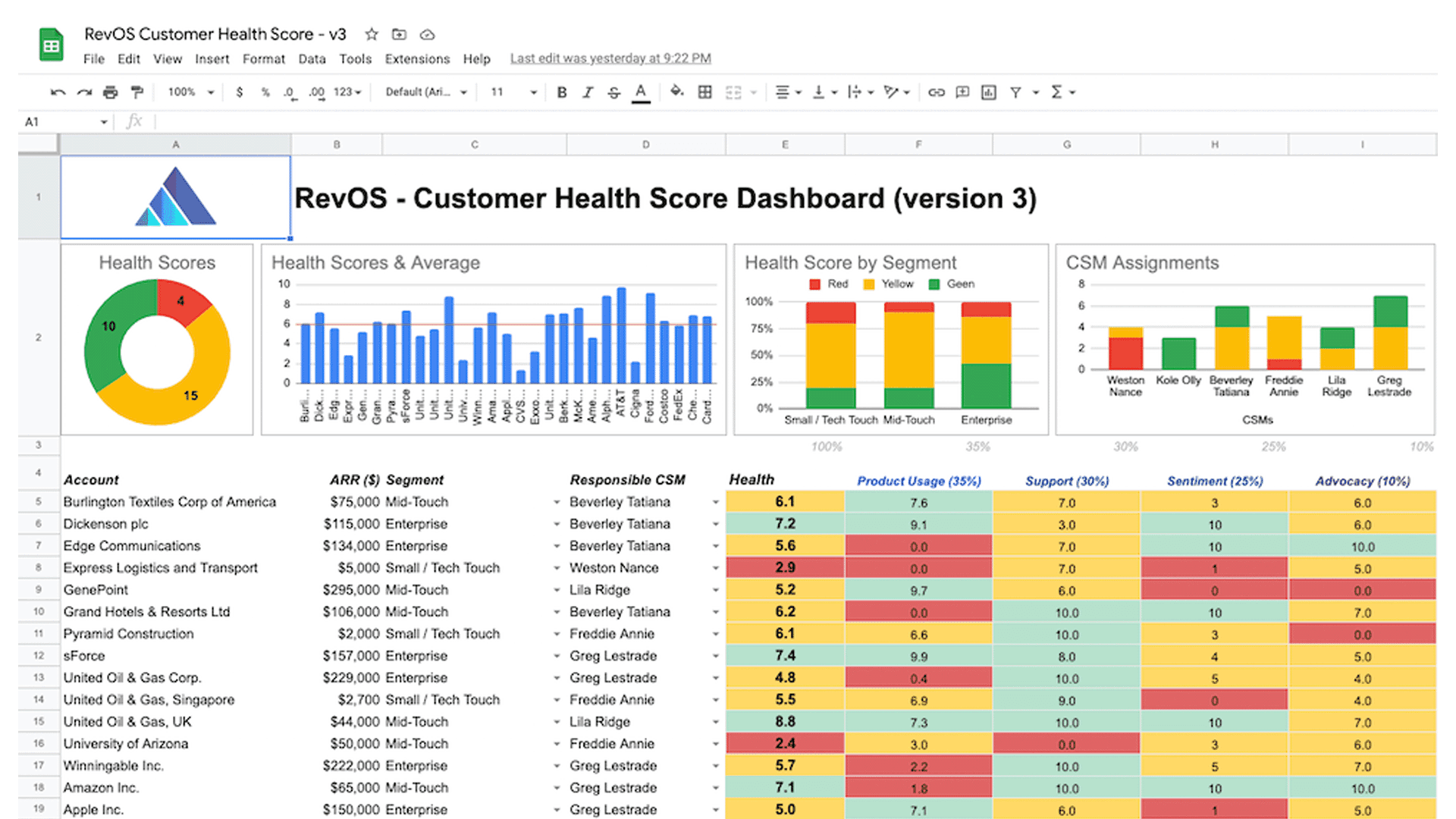
Time to First Reply is a strong responsiveness signal — but it's just one of several support-side inputs that should roll up into a composite customer health score. See the Customer Health Score guide for the full framework: how FRT fits alongside FCR, NPS, CSAT, and product-engagement signals to give you a single number that flags at-risk accounts before they churn.
Related customer health metrics#
- First Contact Resolution (FCR)
- Time to Full Resolution
- Customer Satisfaction Score (CSAT)
- Customer Effort Score (CES)
- Net Promoter Score (NPS)
- Customer Health Score
- License Utilization
- DAU / MAU ratio
- WAU / MAU ratio
Frequently asked questions
- What is time to first reply?
- Time to First Reply (FRT), also called First Response Time, is the median time between a customer submitting a support ticket and an agent's first human response. It's a core customer-service KPI and one of the four support-side signals in a composite customer health score.
- What is a good first response time?
- It depends on channel and plan tier. The 2026 benchmark targets are < 12 hours for self-serve email, < 4 hours for B2B SaaS mid-market email, < 1 hour for enterprise email, and < 1 minute for live chat . Social media sits between email and chat at < 2-5 hours. See the benchmarks table above for the full breakdown.
- How is first response time calculated?
- FRT = (Sum of first response times across all tickets) ÷ (Number of resolved tickets) . Always report the median , not the mean. Compute against business hours only — weekend gaps shouldn't count. Count only the first human reply — auto-responders don't qualify.
- What's the difference between first response time and resolution time?
- First Response Time (FRT) measures only the wait until an agent first replies. Time to Full Resolution (TFR) measures the total time from ticket open to ticket closed. A ticket can have a 1-minute FRT and a 5-day TFR if it requires engineering work to resolve. Track both — fast first replies don't necessarily mean fast resolutions. See our Time to Full Resolution guide for the resolution side of the picture.
- How to reduce time to first reply?
- In order of impact: (1) auto-triage tickets to the right team on intake, (2) tier your SLAs by plan, (3) write macros for the top 20% of question types, (4) shift volume to self-serve via a help center, (5) align coverage windows to customer geography, (6) deploy AI-assisted reply drafting for human agents.
- Does first response time affect customer satisfaction?
- Yes, but with diminishing returns. Once you're under the channel-appropriate threshold (e.g., < 4 hours for email), further reductions stop correlating with CSAT . The cliff is on the slow side — going from "12-hour reply" to "4-hour reply" lifts CSAT noticeably; going from "4-minute reply" to "1-minute reply" usually doesn't.
- Is FRT the same as TFR?
- In the wider industry, "TFR" is occasionally used as a synonym for Time to First Reply — which is what this article is about. On this site we use FRT for first reply and reserve TFR for Time to Full Resolution to avoid the acronym collision.
Read more about revenue operations, growth strategies, and metrics in our blog and follow us on LinkedIn and Youtube.
All articles