

On this page
Customer Satisfaction Score (CSAT) is a single-question customer-experience metric calculated as (Positive Responses ÷ Total Responses) × 100, where a positive response is typically a 4 or 5 on a 1-5 satisfaction scale. The benchmark range most teams target is 75-85% healthy, ≥70% good, <50% poor, with the cross-industry average sitting around 78% (Salesforce, 2026). CSAT is the simplest of the three customer-experience metrics — paired with NPS (loyalty) and CES (effort), it forms the front-line satisfaction signal in any composite customer health score.
In practice, CSAT is collected via a short post-interaction survey ("How satisfied were you with this experience?") on a 1-5 scale. The score is the percentage of respondents who select 4 or 5 — a high CSAT means most customers had a positive experience; a low score flags areas that need improvement. CSAT is one input into a composite customer health score, which combines satisfaction, loyalty, adoption, and support signals into a single number that drives renewal and expansion decisions.
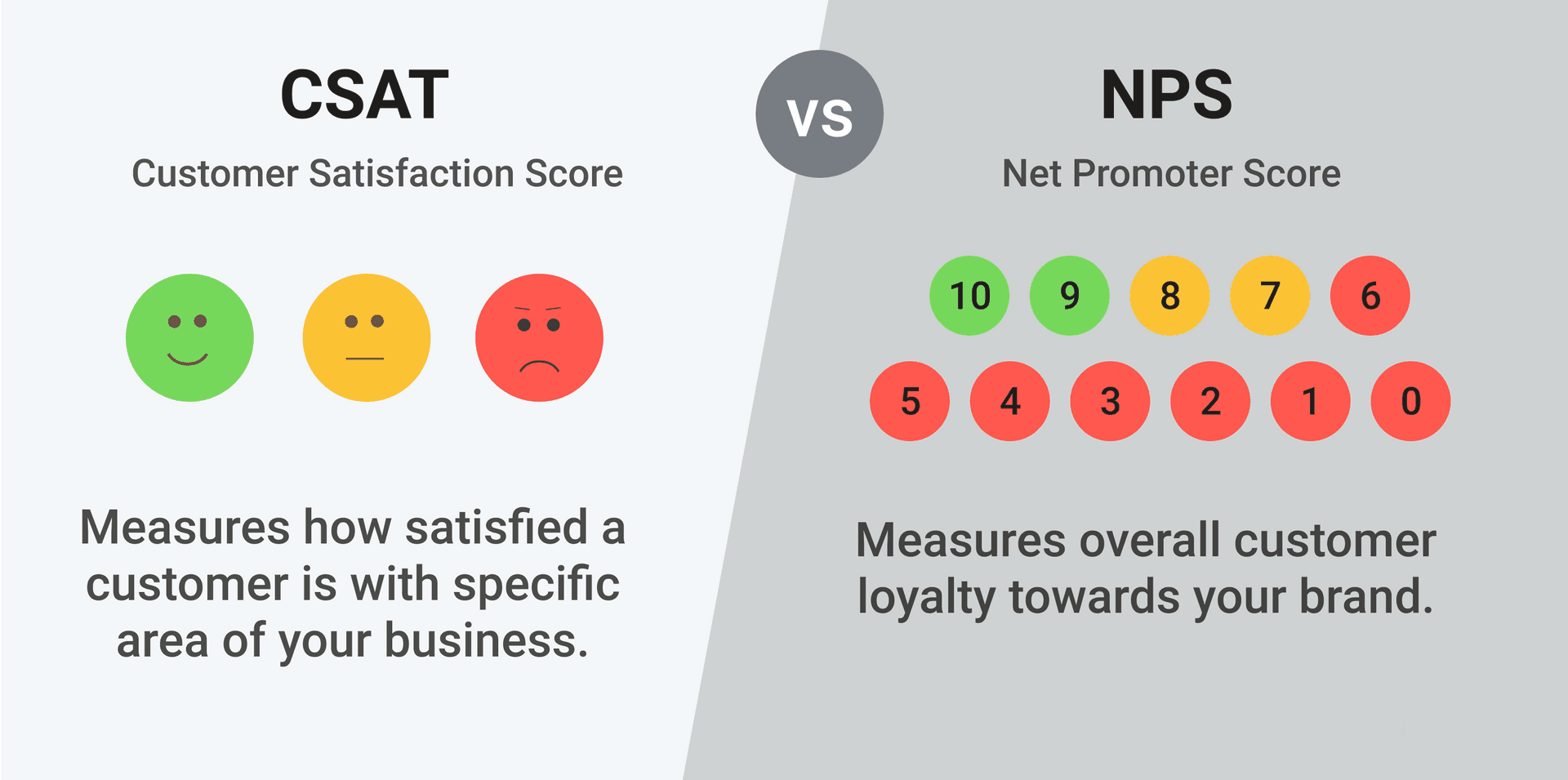
When we talk about measuring customer experience and satisfaction, three metrics inevitably come up as the ones to use: Customer Satisfaction Score (CSAT) vs Net Promoter Score (NPS) vs Customer Effort Score (CES). As we discussed in our first article Net Promoter Score (NPS) is a measure of long-term happiness or customer loyalty and the scale used is 0-10, 10 indicating the highest and 0 indicating the lowest. And CSAT is usually measured on a 5-scale using the below answer examples:
- Very Unsatisfied / Very Unhappy / Very Bad
- Unsatisfied / Unhappy / Bad
- Neutral
- Satisfied / Happy / Good
- Very Satisfied / Very Happy/ Very Good
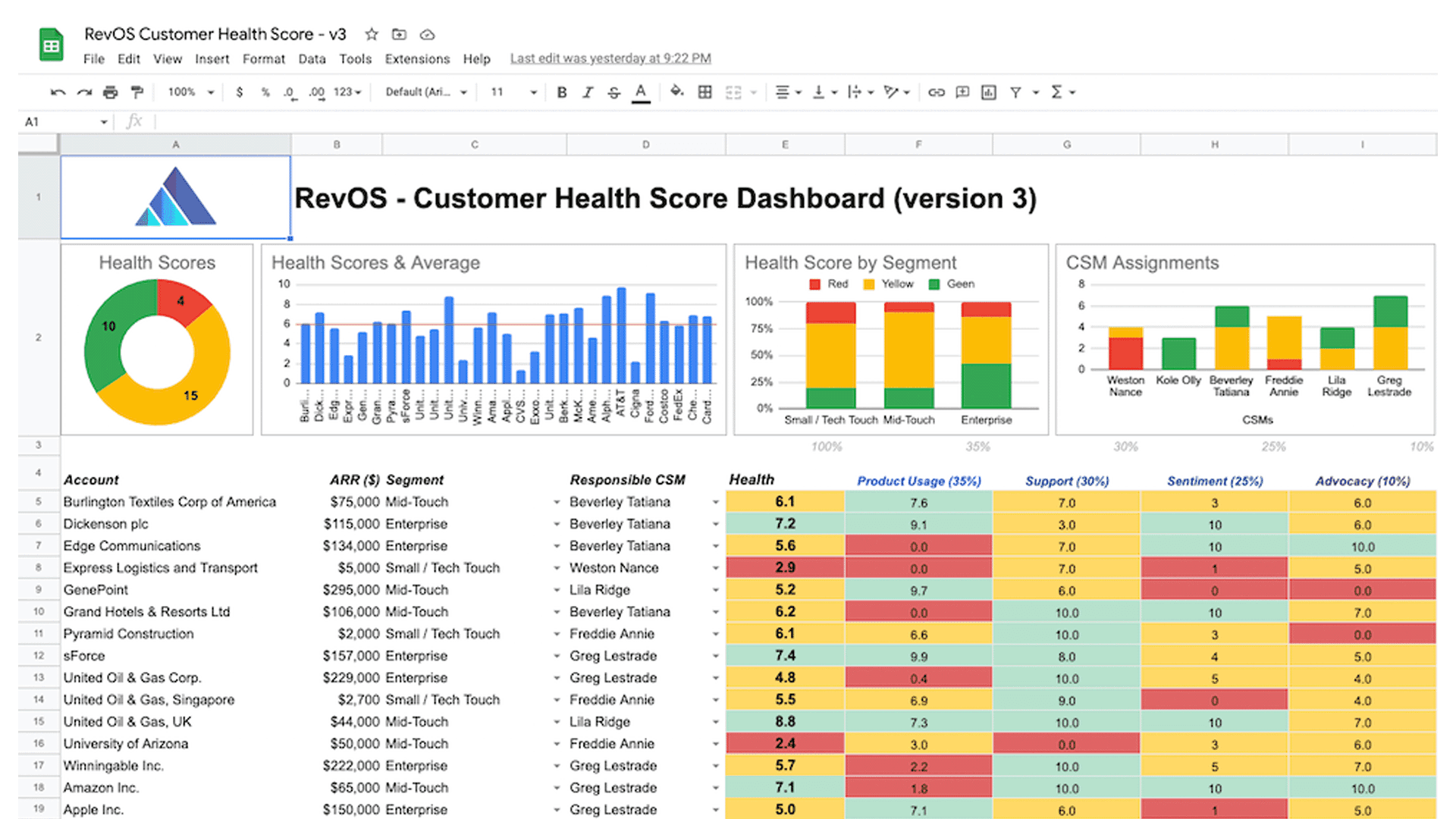
Customer Health Score is an important concept that should help customer success and sales to prioritize customer outreach and communication. It’s simple to grasp but complex to calculate — the Customer Health Score guide covers the composite scoring model that combines CSAT, NPS, product adoption, support load, and value realisation into a single number.
Benchmarks#
A "good" CSAT score depends on the industry, the customer base, and how strict you are about what counts as a positive response. As a rule of thumb (Salesforce, 2026): ≥70% is good, 75-85% is healthy, <50% is poor, and the cross-industry average is around 78%.
| Industry | 2026 CSAT benchmark |
|---|---|
| B2B SaaS | 75-83% |
| E-commerce / retail | 78-85% |
| Financial services | 75-80% |
| Telecom / utilities | 65-72% |
| Cross-industry average | ~78% |
Sources: Salesforce 2026 CSAT report, Fullview CSAT Benchmarks by Industry, SurveyMonkey Benchmarks.
Five factors to weigh when reading your own score against these ranges:
- Industry comparison — a 75% in financial services is healthier than a 75% in e-commerce. Benchmark against your own sector, not a global average.
- Customer base — luxury / high-touch products typically score lower than mass-market because expectations are higher.
- Company goals — a 90% CSAT with low usage isn't worth more than an 80% CSAT with growing usage. Read CSAT alongside adoption.
- Open-text feedback — the score is the headline; the verbatims are the diagnosis. A drop from 82% to 76% means nothing until you read why.
- Trend over time — single-quarter snapshots are noisy. Track quarter-over-quarter for at least four quarters before treating a movement as signal.
CSAT is never the only health indicator — pair it with NPS, CES, license utilization, and adoption to get a complete read on customer health.
Challenges#
There are several main challenges in measuring and controlling the CSAT score for customer health scoring:
- Sample bias: The sample of customers surveyed may not be representative of the entire customer base, which can skew the CSAT score.
- Response bias: Customers may not be motivated to respond to the survey or may not be honest in their responses, which can also skew the score.
- Difficulty in tracking changes: It can be difficult to track changes in CSAT scores over time and to determine the cause of any changes.
- Difficulty in understanding customer feedback: CSAT scores alone do not provide a detailed understanding of why customers are dissatisfied or satisfied, so it can be difficult to identify specific areas that need improvement.
- Difficulty in Actioning: Once the score is identified, it is difficult to know which actions to take to improve the score, as it can be hard to determine the root causes of customer dissatisfaction.
To overcome these challenges, companies may need to use additional metrics, such as Net Promoter Score (NPS) or Customer Effort Score (CES) in addition to CSAT scores and use a combination of survey and customer data, such as purchase history, login/usage metrics, customer support interactions, and demographic or firmographic data to understand customer behavior and preferences.
Alternatives#
There are several alternatives to the CSAT score that can be used to measure customer satisfaction, including:
- Net Promoter Score (NPS): This metric measures customer loyalty by asking customers how likely they are to recommend a product or service to others on a scale of 0 to 10.
- Customer Effort Score (CES): This metric measures the ease of the customer experience by asking customers how much effort they had to exert to get their issue resolved.
- License Utilisation: This metric refers to the extent to which a customer is using the licenses they have purchased from a company, it can be a leading indicator of customer satisfaction (or challenges with it).
The choice of the metric depends on the company's goals and priorities as well as the product that is offered. Companies can use a combination of these metrics to gain a more complete understanding of their customer's satisfaction and loyalty.
Build your customer health score#
CSAT is a critical signal in any customer success strategy — but on its own it's too narrow to drive renewal or expansion decisions. Combine it with NPS, product adoption, support load, and value-realisation metrics into a composite customer health score that surfaces at-risk accounts before they churn. See the Customer Health Score guide for the full framework, or the RevOS Customer Health Score use case for the automated version.
FAQ#
How do you calculate customer satisfaction score?#
CSAT (%) = (Number of Positive Responses ÷ Total Number of Responses) × 100, where a positive response is typically a 4 or 5 on a 1-5 satisfaction scale. If 80 out of 100 respondents pick 4 or 5, your CSAT is 80%.
What's a good CSAT score?#
75-85% is the healthy range across most industries; ≥70% is considered good and <50% is poor. The cross-industry average is around 78% (Salesforce, 2026). Always compare against your own industry benchmark — financial services typically scores 75-80%, e-commerce 78-85%, telecom 65-72%.
What is CSAT vs NPS vs CES?#
Three complementary customer-experience metrics: CSAT measures satisfaction with a specific interaction or product ("How satisfied were you?", 1-5 scale), NPS measures long-term loyalty ("How likely are you to recommend us?", 0-10 scale, % Promoters − % Detractors), and CES measures effort ("How easy was it to resolve your issue?", 1-7 scale). Use CSAT for interaction quality, NPS for retention forecasting, CES for friction in support and onboarding.
What is a good CSAT and NPS score?#
For B2B SaaS specifically: CSAT 75-83% and NPS 30-40 are both above-median. NPS above 50 is excellent, above 70 is world-class. CSAT above 85% is excellent — be careful about response bias if you see 95%+ (happy customers respond more often than neutral ones).
What are the 5 basic levels of customer satisfaction?#
On the standard 1-5 CSAT scale: 1 — Very Unsatisfied, 2 — Unsatisfied, 3 — Neutral, 4 — Satisfied, 5 — Very Satisfied. The CSAT score is the share of responses that fall into level 4 or 5. The 1-5 scale is the most common; some teams use a 1-7 or 1-10 scale, but the calculation is the same — % of responses in the top two boxes.
What's the difference between CSAT and Customer Effort Score (CES)?#
CSAT measures how satisfied a customer was with an interaction; CES measures how much effort they had to put in to get there. A customer can be satisfied with the outcome (high CSAT) but exhausted by the process (low CES) — and that gap is the strongest early signal of churn risk. See the Customer Effort Score (CES) guide for the full breakdown.
Related customer health metrics#
- Net Promoter Score (NPS)
- License Utilization
- DAU / MAU ratio
- WAU / MAU ratio
- Customer Effort Score (CES)
- First Contact Resolution (FCR)
- Time to Full Resolution (TFR)
- Time to First Reply (TFR)
Frequently asked questions
- How do you calculate customer satisfaction score?
- CSAT (%) = (Number of Positive Responses ÷ Total Number of Responses) × 100, where a positive response is typically a 4 or 5 on a 1-5 satisfaction scale. If 80 out of 100 respondents pick 4 or 5, your CSAT is 80%.
- What's a good CSAT score?
- 75-85% is the healthy range across most industries; ≥70% is considered good and <50% is poor. The cross-industry average is around 78% (Salesforce, 2026). Always compare against your own industry benchmark — financial services typically scores 75-80%, e-commerce 78-85%, telecom 65-72%.
- What is CSAT vs NPS vs CES?
- Three complementary customer-experience metrics: CSAT measures satisfaction with a specific interaction or product ("How satisfied were you?", 1-5 scale), NPS measures long-term loyalty ("How likely are you to recommend us?", 0-10 scale, % Promoters − % Detractors), and CES measures effort ("How easy was it to resolve your issue?", 1-7 scale). Use CSAT for interaction quality, NPS for retention forecasting, CES for friction in support and onboarding.
- What is a good CSAT and NPS score?
- For B2B SaaS specifically: CSAT 75-83% and NPS 30-40 are both above-median. NPS above 50 is excellent, above 70 is world-class. CSAT above 85% is excellent — be careful about response bias if you see 95%+ (happy customers respond more often than neutral ones).
- What are the 5 basic levels of customer satisfaction?
- On the standard 1-5 CSAT scale: 1 — Very Unsatisfied, 2 — Unsatisfied, 3 — Neutral, 4 — Satisfied, 5 — Very Satisfied. The CSAT score is the share of responses that fall into level 4 or 5. The 1-5 scale is the most common; some teams use a 1-7 or 1-10 scale, but the calculation is the same — % of responses in the top two boxes.
- What's the difference between CSAT and Customer Effort Score (CES)?
- CSAT measures how satisfied a customer was with an interaction; CES measures how much effort they had to put in to get there. A customer can be satisfied with the outcome (high CSAT) but exhausted by the process (low CES) — and that gap is the strongest early signal of churn risk. See the Customer Effort Score (CES) guide for the full breakdown.
Read more about revenue operations, growth strategies, and metrics in our blog and follow us on LinkedIn and Youtube.
All articles